
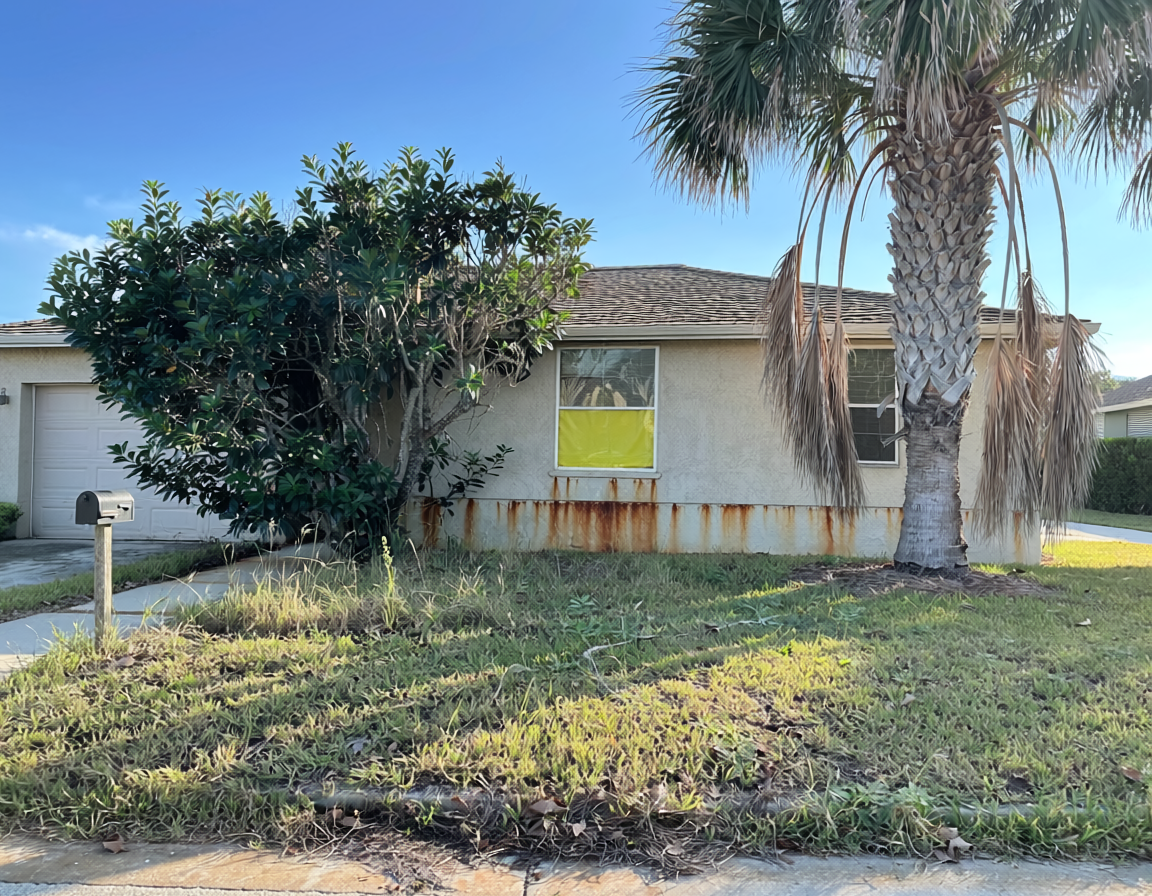
A client spotted a neighboring property sliding into neglect — vegetation overtaking the front of the house, dead palm fronds left hanging, a lawn going to seed. Real conditions, the kind of slow blight that drags down a block. But they didn’t want to be the neighbor who called it in. In a tight Florida neighborhood, that’s how feuds start.
That’s the gap SNITCH closes.
We started with STAN, our standard process. The client sent the address, photos, and a short description. We identified which conditions were actually fileable under the municipality’s property maintenance code — not every eyesore is a violation, and we don’t file the ones that aren’t. We confirmed the right jurisdiction and department, and verified the city would accept a complaint filed on the client’s behalf.
Then we checked the part most people miss: the public-records posture. Florida’s Chapter 119 means a complainant’s name can become a disclosable record depending on how a city handles intake. We told the client exactly what that meant for their situation before anything was filed — no false promises about anonymity, just a clear picture so they could decide.
The complaint went in clean: specific conditions, the right code language, filed through the proper channel. The client stayed out of it.
That’s the whole point. A code violation is a code violation regardless of who reports it. SNITCH makes that real by taking the personal cost out of participation.
SNITCH facilitates Florida code-enforcement complaints. This is not legal advice; anonymity depends on jurisdiction and Florida public-records law.
Here’s what we submitted:
Based on the visual evidence in submitted image for the property at **** in Margate, here are the potential code enforcement violations that stand out:
- Exterior Maintenance (Discoloration/Staining)
The most prominent issue is the severe discoloration on the lower left exterior wall of the house, below the window. The heavy orange/brown staining—likely rust from well-water sprinklers or severe dirt/mildew buildup—typically violates municipal property maintenance standards that require exterior surfaces to be kept clean, painted, and free of blight. - Lawn and Swale Maintenance
The grass and weed growth across the front yard and the swale (the strip of grass between the sidewalk/curb and the street) appears unkempt. While it might be bordering on the exact inch-height limit for a violation, the lack of edging along the street curb and the proliferation of weeds are standard property maintenance triggers. - Dead and Overgrown Vegetation
Dead Fronds: The palm tree on the far left has dead, hanging fronds that have not been trimmed.
Overgrown Canopy: The large, bushy tree in the center of the yard is heavily overgrown, appearing unmaintained and potentially obstructing the front walkway or entrance. - Questionable Window Covering (minor)
To the right of the center tree, there is a window covered from the inside with a solid, bright yellow material. If this is a makeshift covering (like paper, cardboard, or plastic) rather than a manufactured blind or curtain, it often violates exterior aesthetic or structural codes prohibiting temporary/makeshift window coverings.
What is NOT a visible violation: The SUV in the driveway appears to have a license plate, has inflated tires, and is parked on a proper paved surface rather than the grass.
Note: the image is AI generated, offered as an idea of what we submitted, and not the actual photos.